


How Restored Wetlands Can Protect Europe from Russian Invasion
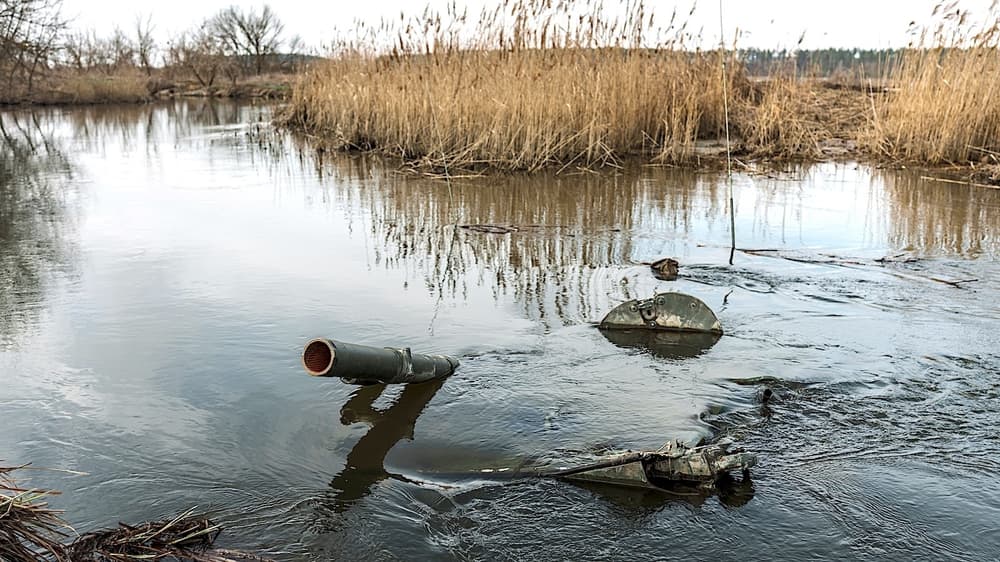
In February 2022, as Russian forces launched their invasion of Ukraine, an unlikely weapon shielded Kyiv, the nation’s capital, from swift defeat: a restored wetland. The attackers advanced from Belarus, which lies to the north of the city, using roads that cut through swamps, peatlands, and waterlogged forests along the banks of the Pripjet and Dnepr rivers.
In their desperation, the Ukrainian army blew holes into a dam on the Irpin River, situated in the northwestern outskirts of the capital, and flooded a large swath of land upstream from where the river meets the massive Kyiv Reservoir. Almost overnight, the planned staging area for Russia’s final assault on Kyiv was turned into a muddy floodplain. The attack began to falter. Images of abandoned Russian tanks mired in the mud circulated globally, earning the Ukrainian army praise for its ingenious use of “hydraulic warfare” or “war-wilding,” as one expert called it.
“The flooding of the Irpin valley became a symbol of how nature can be used to defend against an invader, says Oleksii Vasyliuk, a zoologist with the Ukrainian Academy of Sciences and director of the Ukrainian Nature Conservation Group. To the northeast of Kyiv, nature didn’t even require human intervention. “The landscape there is so rich in peatlands,” Vasyliuk notes, “that many Russian tanks and other armored vehicles simply sank into the ground.” After this setback, Russia abandoned plans to advance into Kyiv and has since focused its ground assault on drier regions in Ukraine’s southeast. Environmentalists have proposed giving the Irpin military honors as the “Hero River.”


